TechFides: June 2026
If your business runs on relationships, and for coaches, advisors, consultants, and business developers it always does, then the handshake at an event is not small talk. It's the top of your funnel. You go to the conference, work the room, hand out a stack of cards, and hope a few of them turn into conversations that turn into clients.
Then you go home, and the whole thing disappears. The cards you handed out are now in other people's pockets, doing nothing. The cards you collected are a rubber-banded stack you'll mean to follow up on and mostly won't. And when a client does come in three months later, you have no real idea which event, which introduction, or which conversation actually produced them. The most important activity in your practice is also the one you can measure least.
An intelligent card fixes both ends of that problem, what your card does after you hand it over, and what you learn from having handed it over.
It keeps working after you walk away
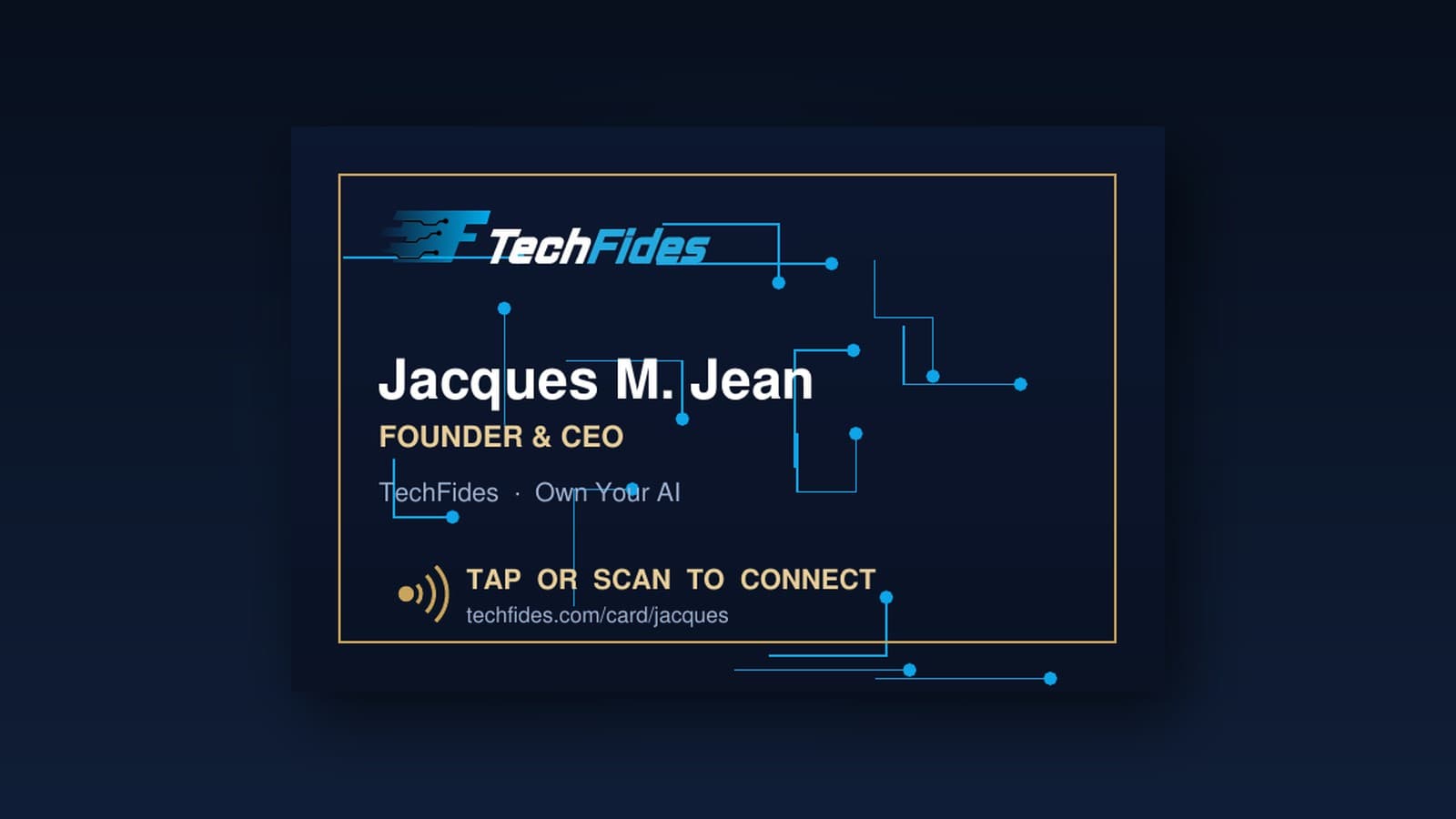
A paper card is inert the moment it leaves your hand. An intelligent card is just getting started. The person taps it, and instead of a dead rectangle they get a living profile of you and your work, and an AI concierge that can actually answer their questions right then.
That matters more than it sounds, because the moment of highest interest is right there at the event, not three days later when you finally email them. Someone you just met can ask the card "do you work with founders at my stage?" or "what does working with you actually look like?" and get a real answer immediately, while they still remember why they were interested. Your card is selling for you in a conversation you're not even part of anymore.
And your details never go stale. New offer, new focus, new number, every card you've ever handed out reflects it instantly, because they all point to a profile you control. You're never the advisor whose card has last year's information on it.
It tells you which rooms are worth your time
Here's the part that changes how you run your practice. Your time is your scarcest asset, and right now you're spending it on events with almost no idea which ones pay off. You go to ten things a year on instinct and a vague sense that "networking is important."
When every card you hand out is logged, which card, tapped when, you finally get the data. A new client surfaces, and you can trace them back to the specific card, the specific event, the specific conversation. Do that across a year and a pattern emerges: these three rooms produce real business, those four are a polite waste of a Tuesday. You stop guessing about where your clients come from and start investing your time where it actually works.
For a relationship business, that's a quiet superpower. You're not just collecting contacts anymore, you're learning which relationships and which rooms drive your growth, and doubling down on them.
Premium, because you are the brand
For an advisor, the card is a first impression of your judgment and taste. So the card itself stays understated and premium, clean metal, your name, nothing loud. The intelligence lives underneath. You hand someone something that feels substantial, it taps to a profile that does real work, and the whole interaction signals that you operate at a different level than the person who fished a bent paper card out of their bag.
Owned, like everything we build
The card is yours. The profile is yours. The concierge speaks for your practice. And the record of who engaged with you belongs to you, not to some app that rents you a digital card and quietly owns your network. That's the TechFides principle applied to the most personal tool you carry: the things that grow your practice should be assets you own and control.
You already do the hard part, showing up, building trust, working the room. The least your business card can do is keep working after you leave, and tell you which handshakes were worth it.
Want a card that builds your pipeline instead of filling a drawer? Talk to TechFides.
Like this? Get the next one Wednesday.
One email per week. No marketing filler. Unsubscribe anytime.