TechFides: June 2026
Look at the business card in your wallet. It was printed once, months ago. Your title may have changed since. The number might be old. It can't do anything, it just sits there as ink on cardstock until the person you handed it to throws it away, which, statistically, they will. Most cards are in a drawer or a trash can within a week.
Here's the strange part: in a company that's gone digital in every other way, the business card is often the last thing still stuck in the analog world. You've modernized your operations, your marketing, your tools, and your single most personal touchpoint, the thing you literally hand to a prospect at the moment of first contact, is a piece of paper that's already out of date.
There's a better version, and it's not a gimmick. It's a card that actually works for you after you hand it over.
What an intelligent card does that paper can't
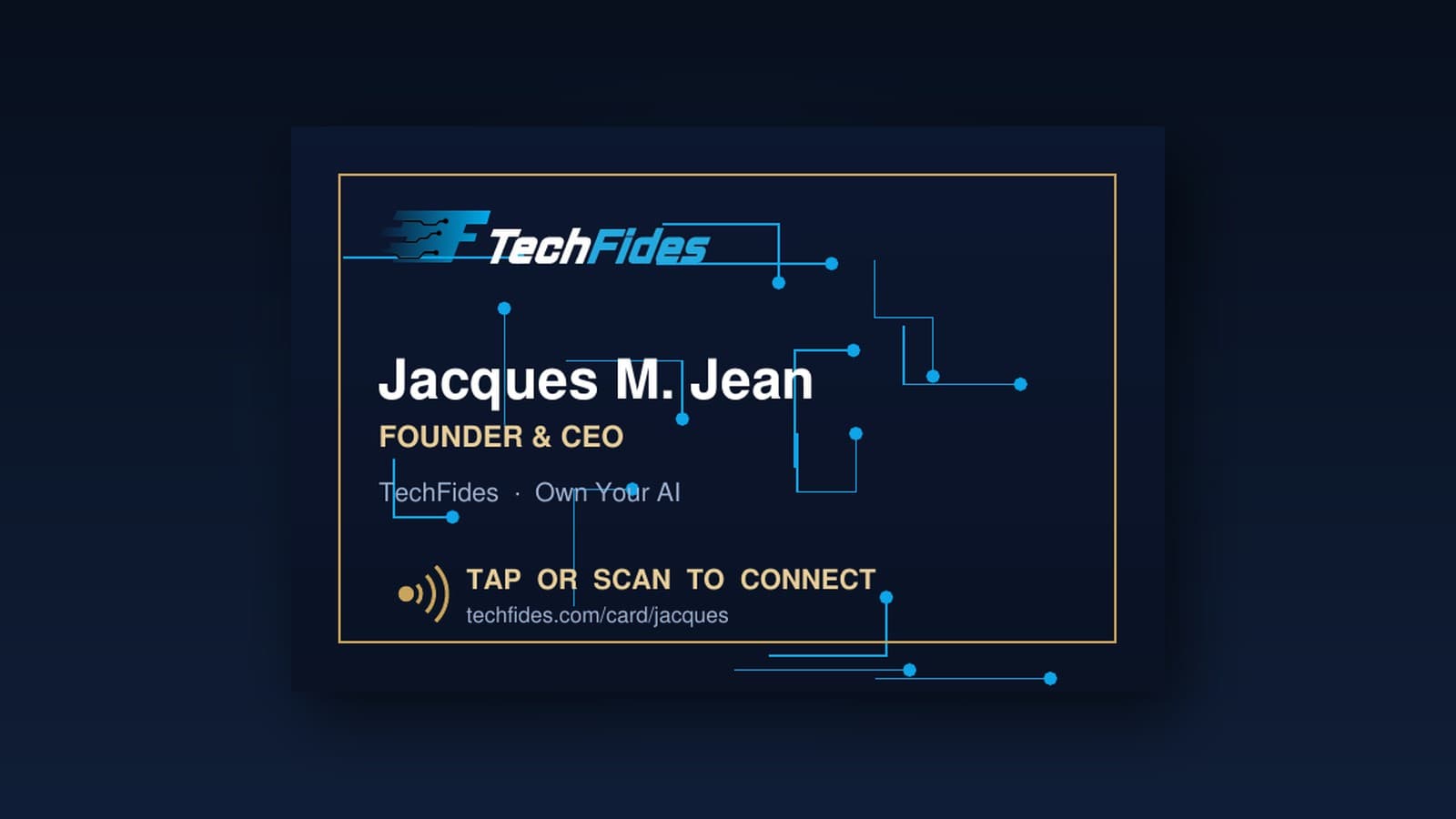
The form factor stays premium, in our case, a matte-black metal card that feels like something worth keeping. But the card is just the key. A tap of the phone opens a living digital profile, and that's where everything changes:
- It's never out of date. Change your title, your number, your offer, the card already reflects it, because the card points to a profile you control, not to frozen ink. Hand out a hundred cards today and update what they show tomorrow, all at once.
- It answers questions when you're not there. The profile carries an AI concierge trained on what you do. The prospect can ask it anything. "can you help a dental office with compliance?" and get a real answer, in the moment their curiosity is highest, without waiting for you to call back.
- It saves itself to their phone. No typing, no lost card. One tap adds your contact, so you're in their phone instead of their recycling bin.
- It tells you what happened. Every tap is logged, who, when, which card. The thing paper could never do: it closes the loop between handing someone a card and knowing whether it led anywhere.
The piece most people miss: attribution
That last point deserves its own moment, because it quietly changes the economics of every conversation you have. With a paper card, a handshake disappears into a black hole. You hand it over, and weeks later a lead comes in, and you have no idea whether it traces back to that conference, that introduction, that dinner.
An intelligent card connects the dots. When a lead surfaces, you can see which card produced it, which means you finally know which events, which rooms, and which relationships are actually generating business. For the first time, the most analog activity in sales, meeting people and handing them something, becomes measurable. You stop guessing about where your pipeline comes from and start knowing.
Why it fits how we think
This is "Own Your AI" in your pocket. The card is yours, the profile is yours, the concierge runs on your catalog and speaks for your business, and the data about who engaged with it belongs to you, not to some app that rents you a digital card and harvests your network. The destination behind the card lives on infrastructure you control, so the card never lies and never expires.
There's a reason the card itself is understated, clean metal, your name, nothing shouting. The restraint is the point. The intelligence is underneath, where it does the work: answering, updating, remembering, attributing.
A business card should do more than prove you exist. It should keep selling after you've walked away, stay current without a reprint, and tell you which handshakes paid off. Paper can't do any of that. It's the last analog thing in your business. It's time it caught up to the rest of you.
Want to see an intelligent card in action? Talk to TechFides and we'll tap you through one.
Like this? Get the next one Wednesday.
One email per week. No marketing filler. Unsubscribe anytime.