TechFides: June 2026
An independent insurance agency sits on some of the most sensitive data in any small business. To write a policy, you collect a Social Security number, a driver's license, a date of birth, sometimes medical history, sometimes a full financial picture. Then you keep it, across applications, renewals, and claims, for years.
Your producers are busy people. So when AI showed up promising to summarize a policy, draft a client email, or pull the details out of a long application, of course your team started using it. The question nobody asked out loud: where does that client's information go when they type it in?
The quiet problem with cloud AI in an agency
When a producer pastes a client's application into a public AI tool to "just summarize this real quick," that information leaves your agency. It travels to a company in another state, lands on servers you can't audit, and in many cases helps train the next version of the model.
For most businesses that's a privacy concern. For an insurance agency it's closer to a carrier-relationship and licensing problem. You signed agreements about how client data is handled. Your E&O carrier has opinions. And "our staff was pasting PII into a chatbot" is not a sentence you want to explain after the fact.
The instinct to use AI is right. The plumbing is wrong.
What private AI changes
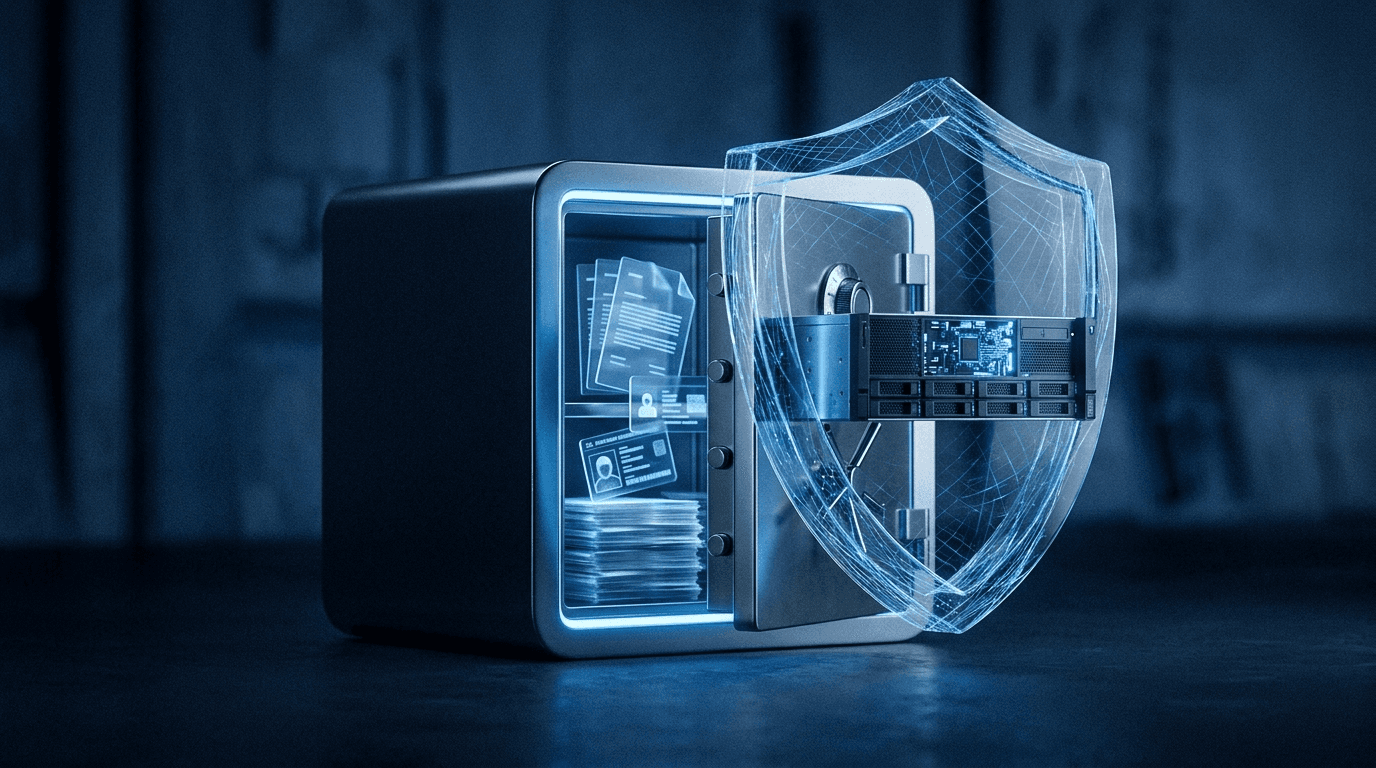
Private AI runs inside your agency, on hardware you own. The same kind of assistant your team already wants, it drafts, summarizes, answers questions about your own files, but it does all of it without the data leaving the building.
That single change unlocks the work your producers actually wanted to do:
- Quote and application intake. Pull the key details out of a long application or a carrier PDF, without that document ever going to an outside server.
- Renewal prep. Summarize a client's history, flag coverage gaps, and draft the renewal conversation, from your real files, not a sanitized version.
- Claims support. Organize documentation and draft updates while the claim data stays inside your perimeter.
- Client communication. Write the email, the policy explainer, the follow-up, in your voice, from real account details.
Your staff stops second-guessing what they're allowed to type, because the AI already lives where the sensitive data lives. There's no line to cross.
What it costs, and why that matters to an agency
Cloud AI charges you more as you use it more. For an agency that runs on volume, every quote, every renewal, every claim, that's a meter you don't want spinning.
Private AI is a flat monthly bill with the hardware included. It doesn't spike during open enrollment. It doesn't climb when you add two producers. You can put a known number in the budget and leave it there. The tool that makes your team faster shouldn't get more expensive the faster they go.
And when the connection drops
Agencies don't stop during an outage, clients still call, claims still come in. Because private AI sits in your office, it keeps working when the internet doesn't. The assistant is in the building. So is the power. That's the point.
Your clients trust you with the details they'd hand almost no one else. Private AI lets you finally put modern tools on that data without breaking the trust that earned it. Own your AI, keep the data in the agency, and let your producers use it on the real work.
Like this? Get the next one Wednesday.
One email per week. No marketing filler. Unsubscribe anytime.