TechFides: June 2026
When people picture "AI," they picture one brand. In private deployment, that's the wrong frame. You're not signing up for a service, you're choosing an engine to install in your building. And like any engine, the right one depends on the job, not the logo.
Here's the plain-English version of the choices, and how we actually decide.
The three you'll hear about
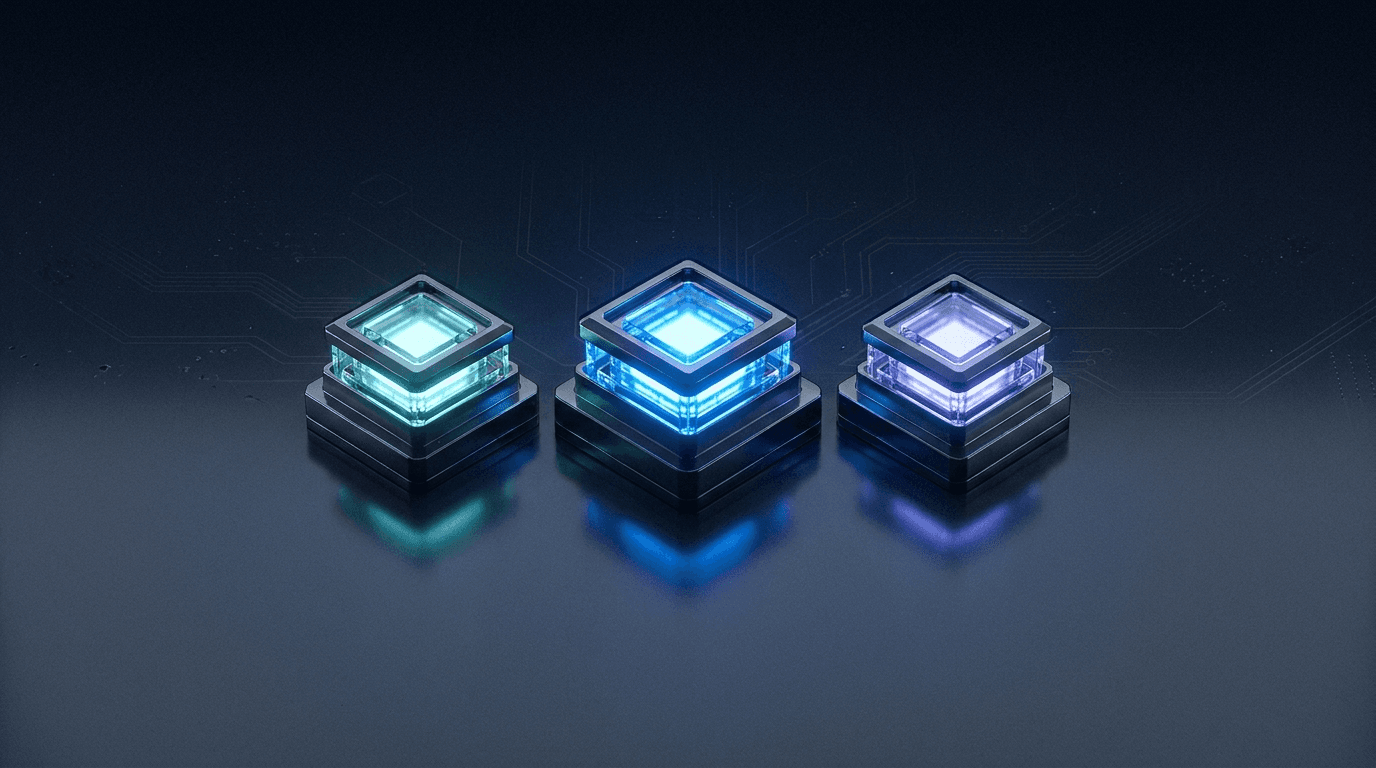
Llama is the open model from Meta. It's free to run, widely supported, and comes in many sizes, from something that fits on a small machine to something that needs a real server. For most small and mid-size businesses, a Llama model running locally handles the daily work, drafting, summarizing, answering questions about your files, without a subscription to anyone.
Mistral is a European open model known for being lean. It punches above its size, which means it can run fast on modest hardware. When a business wants strong results without buying a big box, Mistral is often the efficient pick.
Claude is a commercial model from Anthropic, known for careful, high-quality writing and reasoning. It's not free and, in its standard form, runs in the cloud, so when it's part of a private setup, it's used deliberately, for the work where its quality earns the trade-off.
The point most people miss
You don't have to pick one and live with it forever. A private AI deployment can run more than one model and point each job at the engine that fits it.
A lean local model can handle the high-volume, everyday tasks, the ones where speed and cost matter and "good" is good enough. A heavier model can be reserved for the work where quality really pays: a delicate client letter, a complex document, a tricky summary. You're not choosing a religion. You're staffing a team.
That's why "which model is best" is the wrong question. The right one is: which model is best for this task, on the hardware I'm willing to own?
What actually drives the decision
When we set up a private system, the model choice comes down to four things:
- The work. High-volume routine tasks favor a fast local model. High-stakes, low-volume tasks can justify a premium one.
- The hardware. A bigger, smarter model needs more machine. Part of the job is matching the model to a box you're comfortable buying.
- The privacy line. If the data can never leave the building, that rules in fully local, open models and rules out anything cloud-bound. The data sets the boundary.
- Your team's reality. The best model is the one your people actually use because it's fast and gets the answer right. A brilliant model nobody waits for is a slow model in practice.
Why "agnostic" is the real advantage
TechFides builds hardware-agnostic and model-agnostic on purpose. Your private AI isn't welded to one vendor's engine. If a better open model ships next quarter, and in this field, one always does, we can swap it in without rebuilding your system or renegotiating a contract.
That's the quiet benefit of owning your AI instead of renting it. When the market moves, you move with it. You're not locked to whichever model your provider happened to bet on. The box is yours, the data is yours, and the engine inside it is a choice you get to keep making.
The famous name isn't the goal. The right tool for the work, running on hardware you own, that's the goal. Own your AI, and keep the engine room flexible.
Like this? Get the next one Wednesday.
One email per week. No marketing filler. Unsubscribe anytime.